Electronics & appliances
Housings, bezels, covers, buttons and internal brackets where the tool has to produce clean cosmetic faces and consistent wall sections so parts snap together without rework.
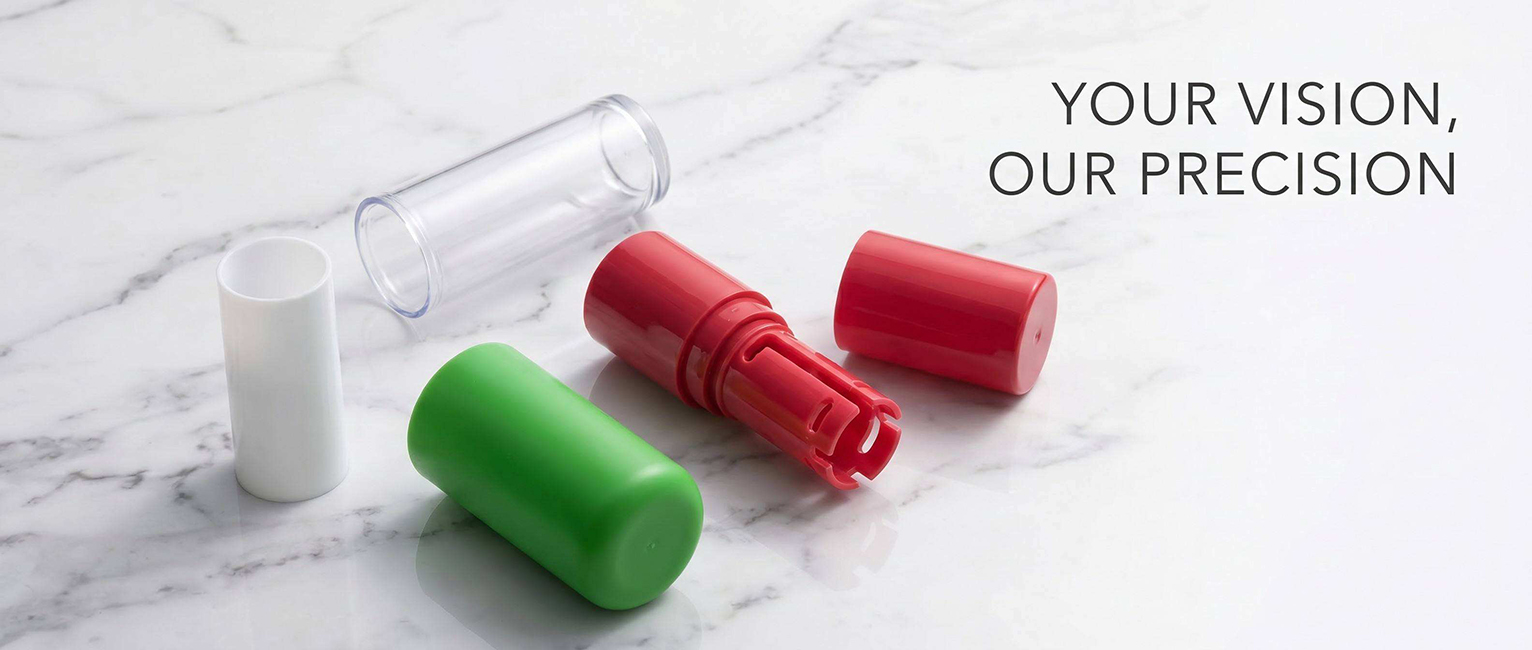
Cents Mould designs and builds precision injection moulds for cosmetics and packaging, medical products, toys and consumer goods, machinery and industrial parts. Every one of those sectors is judged by a different inspector — but all of them fail the same way when a tool starts to drift.
Plastic injection moulding appears in almost every industry that ships a plastic part. A phone housing, a lipstick tube, a syringe barrel cap, a toy wheel and a gearbox cover are all made the same way: molten polymer forced into a steel cavity, cooled, ejected, repeated. The machine does not care what it is making.
The mould does. What changes between industries is not the process but the thing that rejects the part: a cosmetic customer rejects on surface polish and fit, a medical customer rejects on dimensional evidence, a toy customer rejects on material bonding and strength, and a machinery customer rejects on thread and tolerance stack-up. Each of those rejection criteria is decided at the design bench, months before the first shot.
So the job of an injection mould supplier is not to pass a first trial. It is to keep the tool holding tolerance for years of production — after the steel has seen hundreds of thousands of cycles, after the cooling has been re-plumbed, after the material has been changed to a cheaper grade, and after the machine it runs in has been swapped. A tool that measures correctly only in the trial report is not a delivered mould; it is a deferred problem on somebody's production line.
| Industry | The mould must be built for |
|---|---|
| Cosmetics & packaging | Mirror polish and grain consistency, thin walls that fill without short shots, airtight interference fits between mating parts |
| Medical products | Repeatable critical dimensions, documented verification, contamination-controlled moulding environment |
| Toys & consumer goods | Multi-material overmoulding, robust ejection, high cycles between services |
| Machinery & industrial parts | Unscrewing or collapsible cores for threads, wear-resistant shut-offs, structural strength |
The four sectors below are the ones we have tooled most deeply. For each one we have written down what our customers actually specify — not a marketing description of the industry.
Cosmetics and packaging first, because it is the sector that has kept coming back to us for fifteen years — and the one that taught us what mould life really means.
Cosmetics & packaging · lipstick outer & middle tubes
Cents Mould has supplied the moulds for lipstick outer tubes and middle tubes to a very well-known European cosmetics company for 15 consecutive years. It is a relationship built on one thing: the tools are still running. The customer's mould life specification for these tools was 1,000,000 cycles. The moulds we built reached 5,000,000 cycles — five times the requirement — and that is the reason the order book has continued rather than been re-tendered.
 Medical products · verified on CMM, part by part
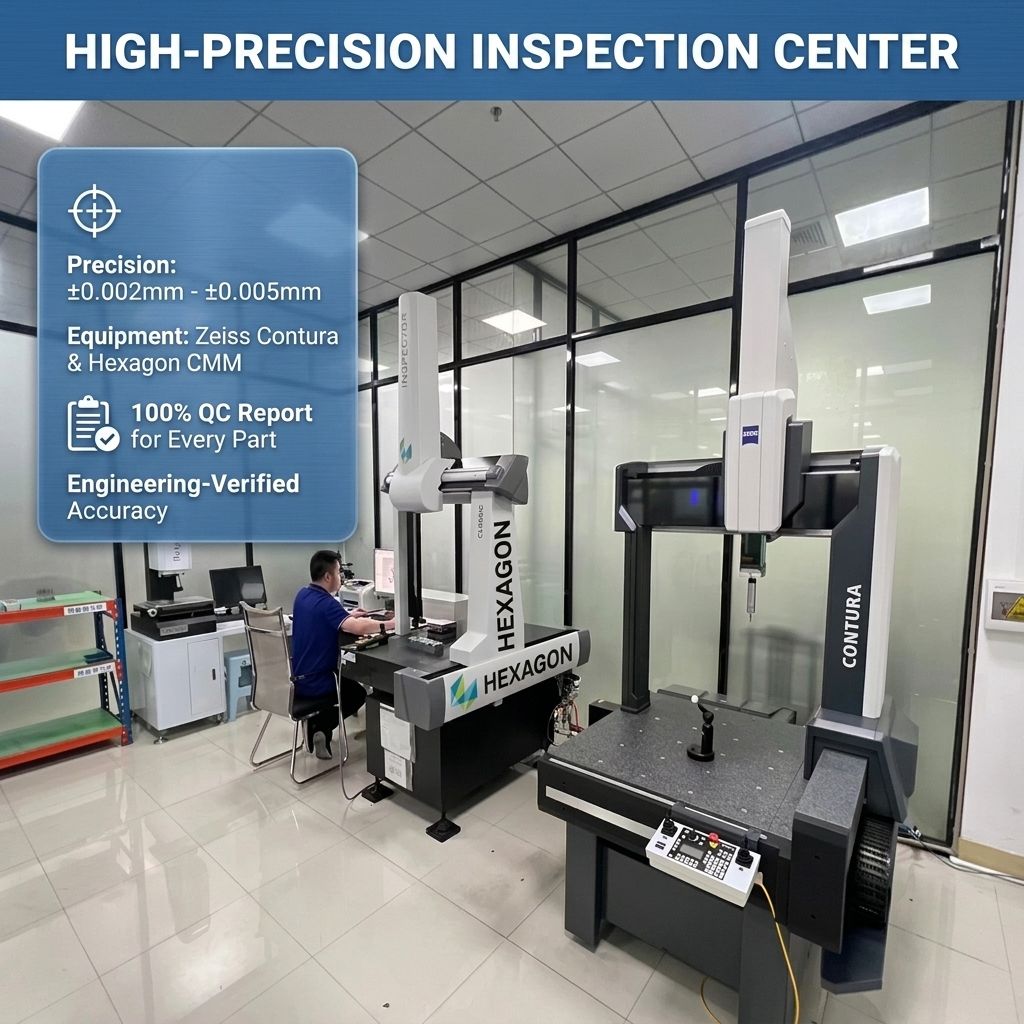
We have more than 20 years of experience making medical product moulds. In this sector the mould is only half of the deliverable — the other half is the evidence that the parts coming out of it are correct. Where moulding is required, it runs in a dedicated anti-dust moulding workshop, kept as a separate environment so that airborne contamination cannot reach appearance-critical or contamination-sensitive parts.
Critical dimensions are verified on Zeiss Contura and Hexagon CMM equipment at ±0.002 mm — ±0.005 mm, with a 100% QC report for every part. Not a sample. Every part.
 Toys & consumer goods · multi-material overmoulding
We have more than 20 years of experience making toy moulds. Toy and consumer goods parts look simple and are not: they take knocks, they carry colour consistency requirements across large batches, and they have to come out of the tool identically shot after shot on presses that are pushed hard.
Multi-material overmoulding — several plastics bonded into one part — is a common requirement in these products. A soft grip over a rigid body, a two-tone housing, a hard shell with a flexible hinge: each of those is a mould problem, because the second material must bond to the first, the first shot must survive being re-clamped, and the shrinkage of two different polymers has to be planned for in the same cavity.
 Machinery & industrial parts · unscrewing thread moulds
We have more than 20 years of experience making machinery parts moulds. Functional parts are judged by whether they assemble and whether they last — which puts the pressure on wall thickness consistency, on dimensional stack-up around mating features, and on the tool surviving rough handling on a busy injection floor.
A large part of that work involves unscrewing moulds for internal and external rotating threads. A moulded thread cannot simply be ejected — it has to be rotated out of the steel, so the tool needs a geared unscrewing mechanism, correctly timed, with the thread form and lead machined to match the counterpart it will screw into. Get the timing or the lead wrong and the thread is stripped on every cycle.
For customers who need parts as well as tooling, we run 30+ injection machines from 20 to 300 tons, which covers small precision components through to larger housings and industrial covers from the same production floor that built the mould.
The same design and machining method, applied to plastic parts in sectors where the customer's name and volumes stay their business, not ours.
Housings, bezels, covers, buttons and internal brackets where the tool has to produce clean cosmetic faces and consistent wall sections so parts snap together without rework.
Functional mouldings such as covers, clips, spacers, guides and housings, tooled for repeatable dimensions rather than appearance, with wear-resistant shut-offs and cores.
Household, storage and personal-use plastic products where a smooth surface finish, a stable grain texture and balanced multi-cavity tooling decide whether the batch looks right.
Small precision parts, inserts and fittings where the mould must hold tight tolerances on small features and eject reliably at high cavitation counts.
Mould design CNC machining EDM & slow-wire EDM Mould trial Injection moulding CMM inspection
Material choice drives gate size, cooling layout, shrinkage allowance, venting and the surface finish that can hold. These are the polymers our moulds run in production.
| Material | What it means for the mould |
|---|---|
| ABS | General-purpose engineering plastic for housings and covers; good finish, predictable shrinkage, tolerates a wide process window. |
| PP | Low-cost, chemically resistant and living-hinge capable; needs generous cooling because of high shrinkage. |
| PC | Transparent, tough, high-temperature; demands high polish, well-vented cavities and controlled injection speed. |
| PA6 / PA66 | Semi-crystalline nylon for structural and wear parts; higher shrinkage, so dimensions are planned around it. |
| POM | High stiffness and low friction for gears, slides and precision mechanism parts; narrow process window. |
| PMMA | Optical clarity for lenses and display parts; requires a spotless cavity and careful gate placement. |
| Material | What it means for the mould |
|---|---|
| TPU / TPE | Flexible elastomers for grips, seals and soft-touch surfaces; common as the second material in an overmould. |
| PC+ABS | Blend combining impact strength with dimensional stability; widely used where a housing must look good and survive drops. |
| PS | Easy-flowing and low-cost for disposable and packaging items; simple tooling but tight cycle targets. |
| PVC | Chemical and weathering resistance; requires corrosion-conscious steel and venting because of acidic by-products. |
| PBT | Dimensionally stable, fast-crystallising engineering plastic for electrical and precision parts. |
| PET | Clarity, strength and barrier properties for packaging-type parts; moisture control before moulding is critical. |
A part specified in ABS and later switched to PA66 will shrink differently, fill differently and eject differently. That is why we ask what the part has to survive, not only what shape it is, before the cavity is cut — and why our engineers run DFM feedback on wall sections, draft, ribs and gate position at the design stage rather than after the trial.
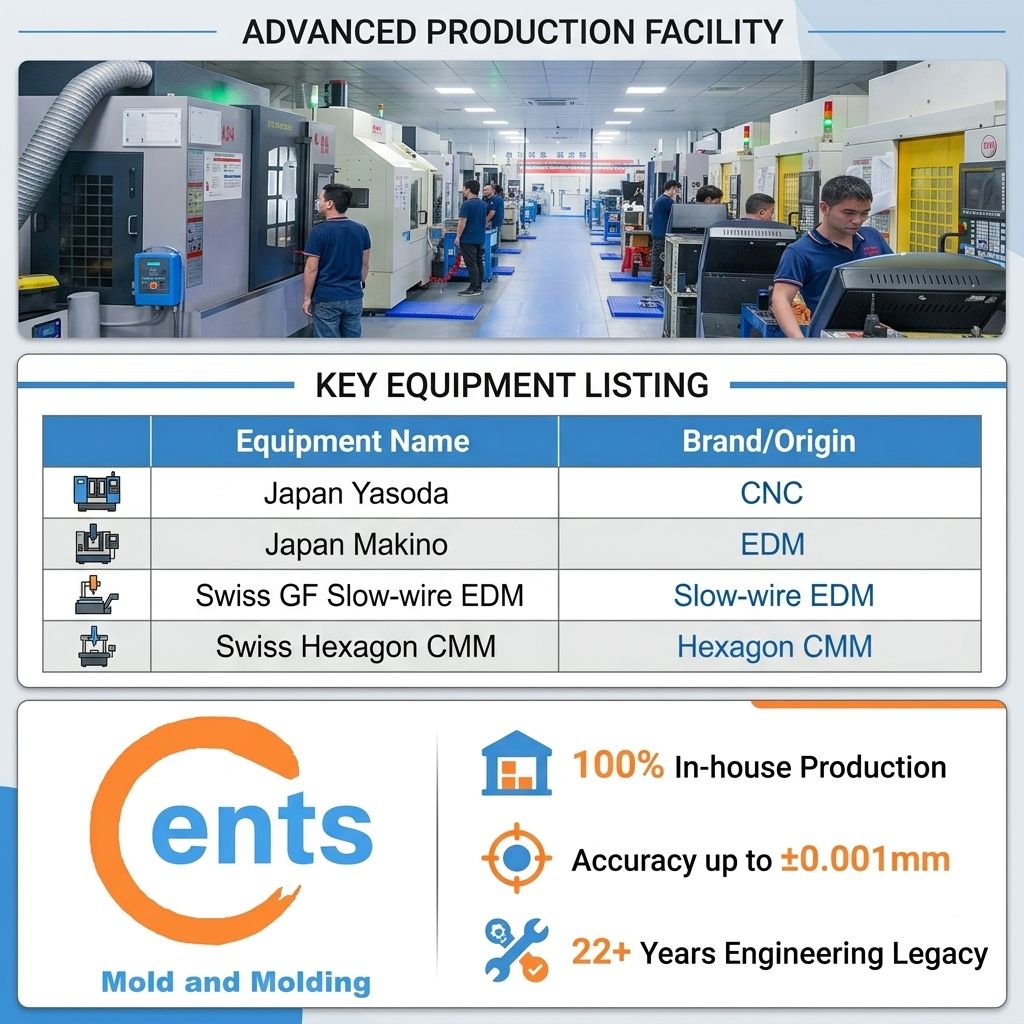
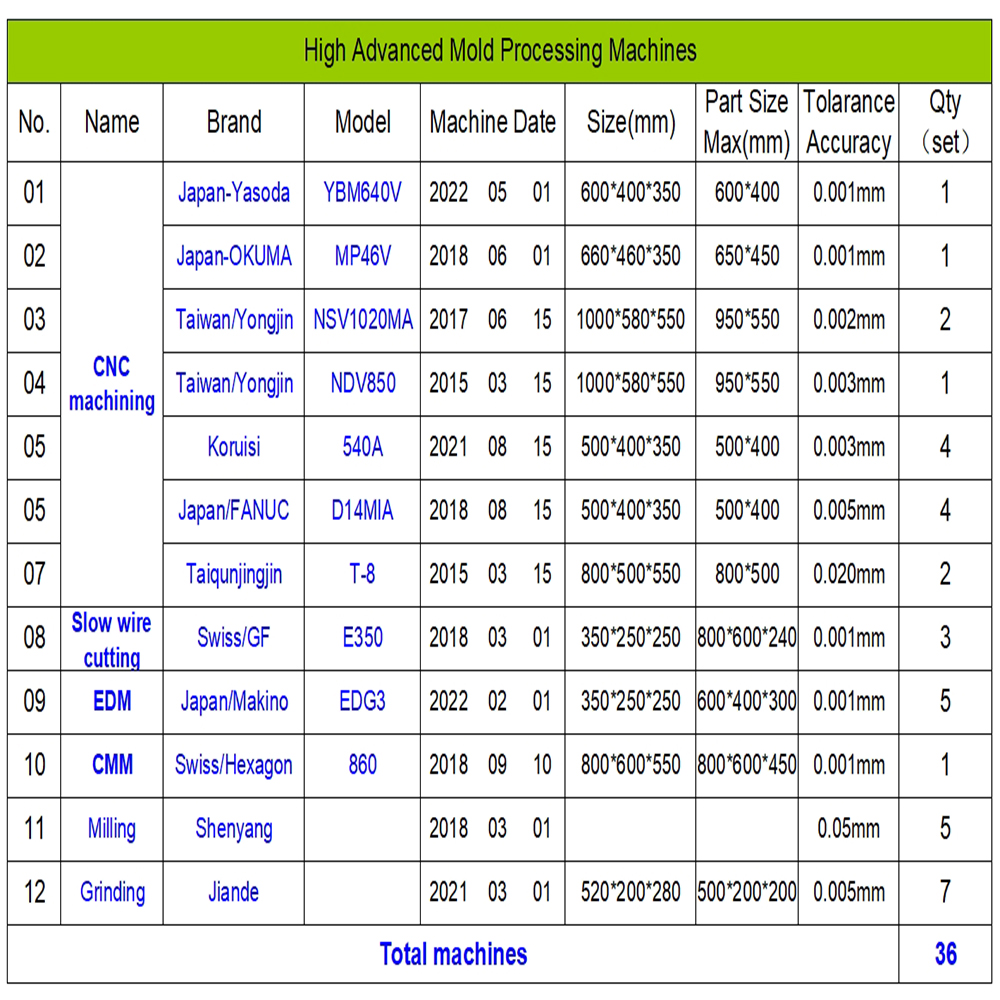
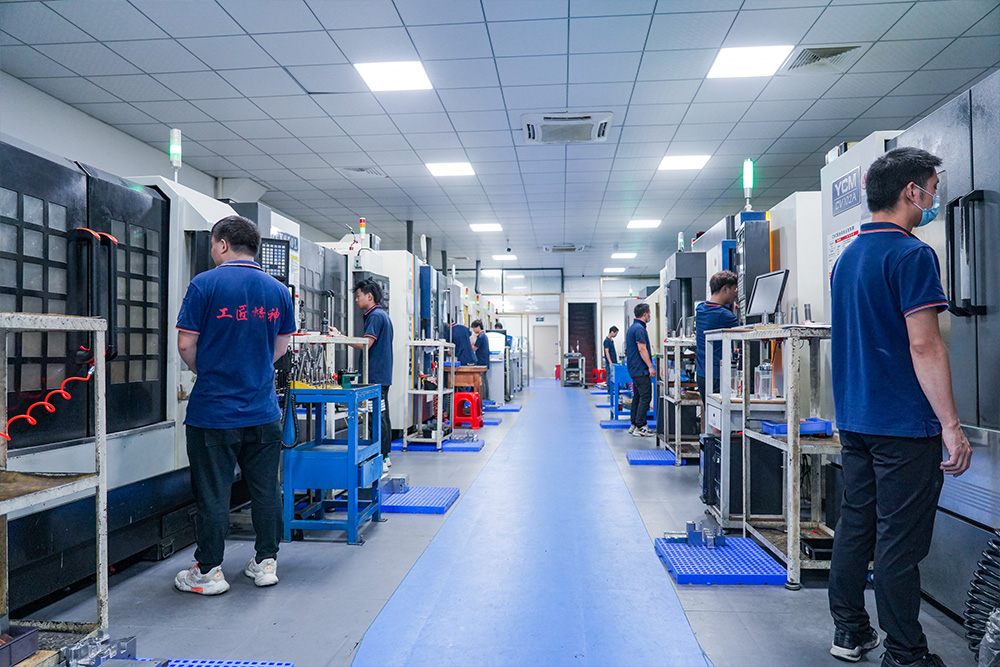
Tooling is machined to ±0.01 mm mould precision with machining accuracy capability down to 0.001 mm, checked on CMM, and trialled on our own injection machines so the customer receives a mould that has already produced parts — plus the process parameters and inspection data that go with them.
Send a 3D file, a 2D drawing or even a sample product for a mould — we will come back with the tooling approach, the material to plan around and a quote.